Tag: ai

  • Art needs Memories

    …before there can be art there must be memories and before there can be memories there must be experience.

    Herbert Read

    All art starts with inspiration. It may be a difficult conversation, an overwhelming emotion, a beautiful sunset, or events we don’t even consciously remember. And if done well, the art invites the viewer or reader or listener in, evoking remembrances of places and people and feelings.

    But this isn’t easy, and the output we see is often only a small part of the effort. Tolkien spending over a decade on The Lord of the Rings, including appendices. Frank Herbert spent five years travelling and exploring a wide range of ideas before starting his epic novel Dune. J.K. Rowling went through years of difficulty between the idea for Harry Potter and publishing the first book.

    Not only that, as participants, we long to know the story behind the art. Who was the love song for? What inspired the book? Why did they choose that movie ending?

    I remember the days of buying an album, struggling to remove the plastic wrap, placing the CD in the player and then poring over the booklet. My favorite albums often had pictures, lyrics, and stories from the artist that enhanced the listening experience.

    But now we have AI art, and it sucks. Not because it is obviously AI (though often it is) but because it was not created by a human. There was no inspiration, no experiences, no memories behind the work; just trillions of tokens of data with some hallucinations and boom, a song or story or video ready for you. I realize that AI generated art is inevitable, but I will do all I can to avoid it, and I hope you will too.

    P.S. Here’s a cartoonist, The Oatmeal, describing their take on AI art (warning, some swears)


  • The problem with AI

    Introduction

    As a technologist, working in the software industry, and as a Christian, thinking deeply about technology, faith, and work – I’ve been closely watching the rise of AI, looking at both the opportunities and the challenges. My goal here is to summarize the biggest issues we as Christians (and everyone concerned with human flourishing) should be aware of.

    AI is a very broad category that covers many technologies, however the majority of AI getting news and usage is generative AI, specifically the models and services created by the largest tech firms in the USA (and China to a lesser extent). This will be the focus of the essay.

    Framework

    To help bring clarity, I’ve created a simple framework, corresponding to the process of producing and using generative AI. At each step I’ll highlight the biggest issues I see. Here is the four step framework:

    Continue Reading

  • AI Isn’t Coming for your Job

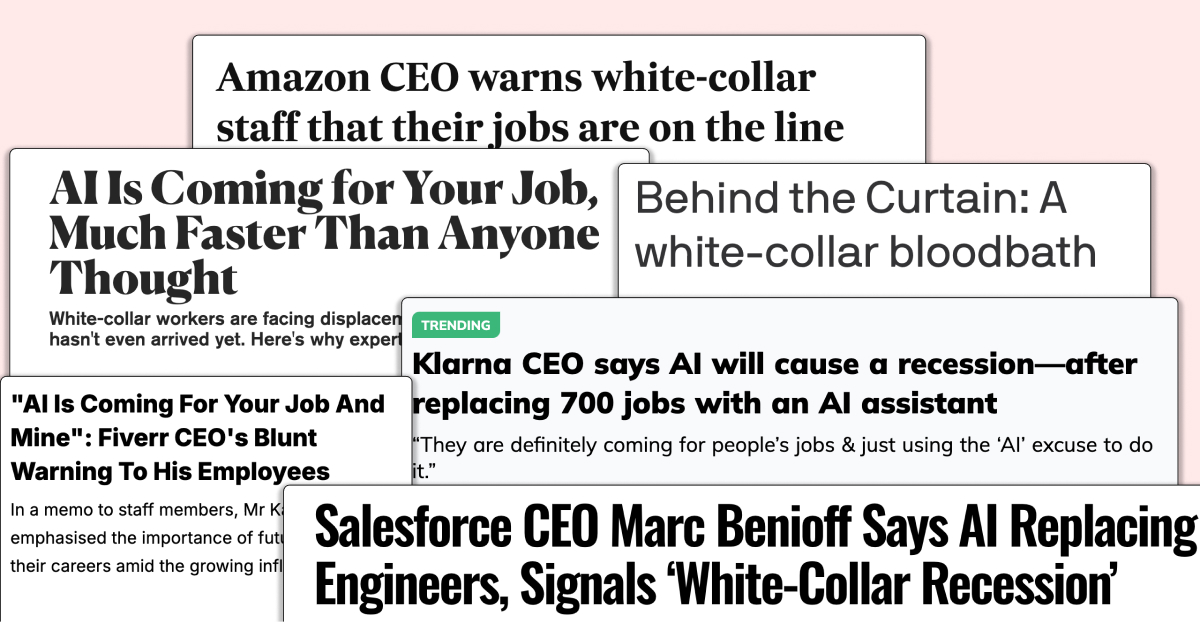
    No. AI* isn’t coming for your job.

    Don’t get me wrong, many jobs are disappearing, especially at the lower levels, but AI isn’t some sentient being plotting your destruction.

    Continue reading

  • AI Cactus

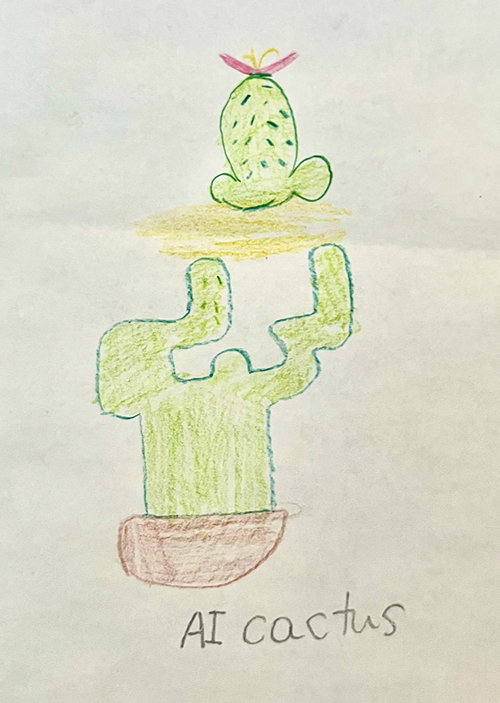
    My Father’s Day card this year had a cactus theme, as my boys know how much I like them. However, my favorite part was the AI cactus, complete with totally impossible physics. I’m so proud they understand the limits of AI 🙂


  • AI vs Cognitive Gains

    Using ChatGPT to complete assignments is like bringing a forklift into the weight room; you will never improve your cognitive fitness that way.

    Ted Chiang

    The tools we use can easily become crutches that inhibit development and even cause atrophy.

    • Driving vs walking -> health decline
    • Calculators vs mental math -> reliance on calculator
    • GPS vs maps & directions -> reliance on GPS
    • Auto-correct vs spelling yourself -> even poorer speeling

    These tools all have a use and can be beneficial, but they cannot be evaluated apart from their impacts. And they actually impact different groups unequally.

    The first group is those who have already gained the skill or technique, but use the tool to become faster or better. They know the “hard” way because they had to learn it. For them the danger is not progressing in a skill, and even atrophying.

    The second group is those who have never known the skill, but learned with the tool. They have never had the chance to learn the “hard” way, and are stuck without it.

    As we think about AI tools like ChatGPT, for us who’ve already learned to write an essay, or draw a picture, or write code, using AI may mean our skills get rusty, but at worst, we could still get along without them. But for the next generation who have not, they will be hopelessly lost without it, dependent on AI tools – and those who own and program them, to complete the basic tasks in work and life.

    Though these tools are being crammed into every product by the tech firms that dominate our lives, we can choose not to use them, and to keep our human-defining skills like writing and making music and art, even if it means taking longer or thinking harder, that’s the point.

    And for those who are learning, remember that though AI may be able to answer your question or complete your assignment, every time you use this tool you are giving it more control and reducing your future independence.